Published on
September 30, 2025
Luxembourg, 30 September 2015
The 2015 award of the Foundation for the Promotion of German-Luxembourg Cooperation in the field of sciences has been awarded to René Closter for his contribution to the creation and development of Luxembourg Air Rescue (LAR). Since 1988, the non-profit organisation has been responsible for rapid air emergency rescue and the transport of intensive care patients. LAR is financed through donations and contributions from its 185,000 members.
Boris Liedtke, Chairman of the Foundation and Board Member of Deutsche Bank Luxembourg S.A., said during the award ceremony: “LAR is the only organisation ensuring air rescue in the Grand Duchy. In addition, it also carries out rescue missions in the border regions of neighbouring countries. In this way, LAR has progressively built up and strengthened cooperation in the border region between Saarland and Rhineland-Palatinate. While discussions are still ongoing in Brussels, René Closter takes action. We are very pleased that there are people in the private sector who, on their own initiative, save lives across European borders. With this foundation award, we wish to support the further expansion of cross-border emergency rescue.”
René Closter, President of Luxembourg Air Rescue, expressed his appreciation for the award and said: “The prize I receive today, I dedicate to all those who have accompanied me over the past decades. My loyal friends, my dedicated employees. In short: all those who helped our shared dream succeed. Without the support of these companions, we would not have managed to establish LAR despite the massive resistance we faced at the time. For that, I am grateful.”
To support the close ties between the Grand Duchy of Luxembourg and the Federal Republic of Germany, Deutsche Bank Luxembourg S.A. founded a foundation in 1995 to promote German-Luxembourg cooperation. The purpose of the foundation is to promote cooperation between the two countries in all areas of science. This includes supporting research projects, awarding research grants and organising conferences. In addition, the foundation regularly honours institutions and individuals who have made outstanding contributions to scientific cooperation between Germany and Luxembourg. In 2015, the award is presented for the 10th time.
AIR RESCUE – The same rules apply on New Year’s Eve as on working days
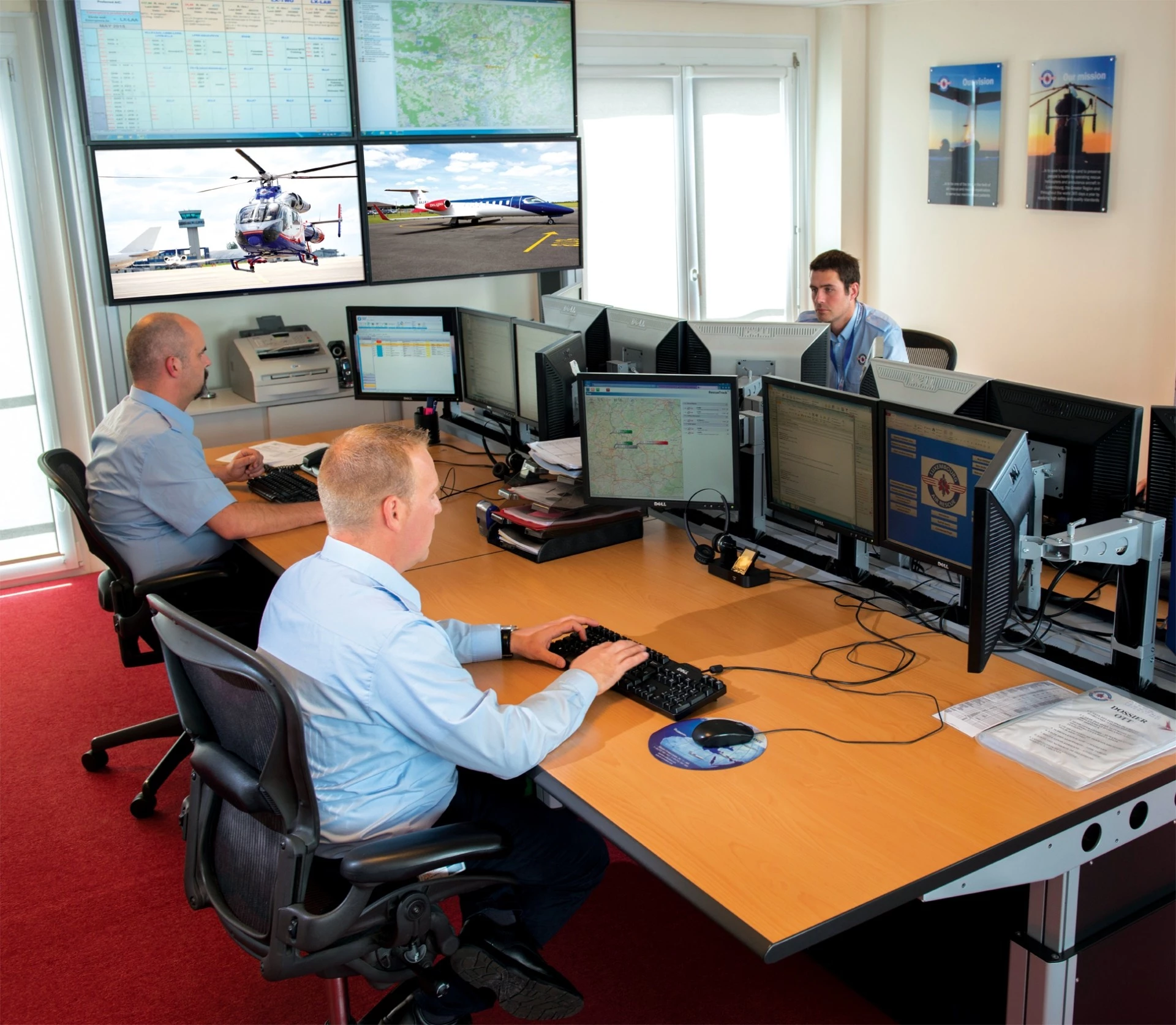
LUXEMBOURG – LAR operates a fleet of five rescue helicopters and five ambulance jets. The so-called “fixed-wing” fleet, unlike the rescue helicopters, is also capable of flying at night. The coordination of ambulance jet missions is carried out at the Luxembourg Control Center (LCC) at Findel Airport. On Sundays, public holidays and during the New Year period, the same rules apply as on working days – “business as usual”.
At the end of the year, Tageblatt took a look behind the scenes of LAR for its readers. New Year’s Eve was anything but quiet for LAR staff, and weather conditions made flight operations considerably more difficult.
Daily operations
LAR’s worldwide aircraft missions are coordinated by a team at the LCC, where activity continues day and night. The aircraft fleet fulfils three essential tasks around the clock: on the one hand, the worldwide repatriation of patients – a service that is free of charge for LAR members. On the other hand, organ transport as an exclusive partner of “France Transplant”, as well as humanitarian missions, for example in the event of major natural disasters.
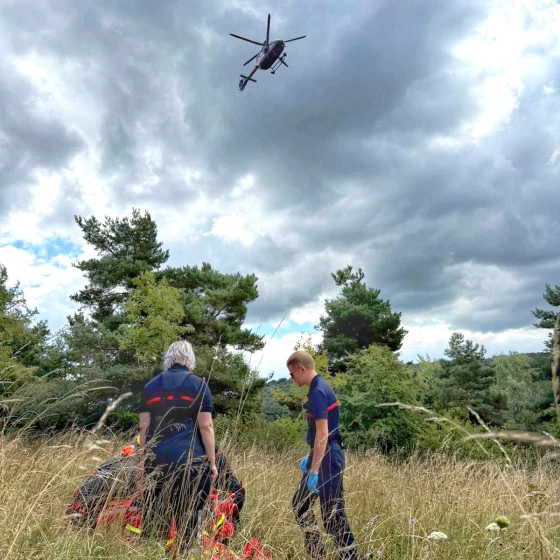
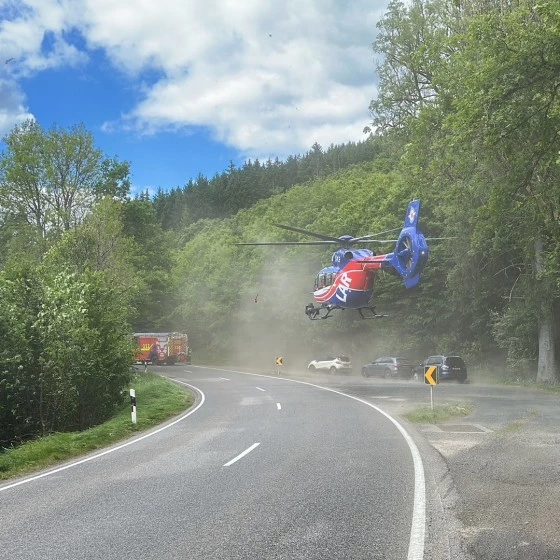
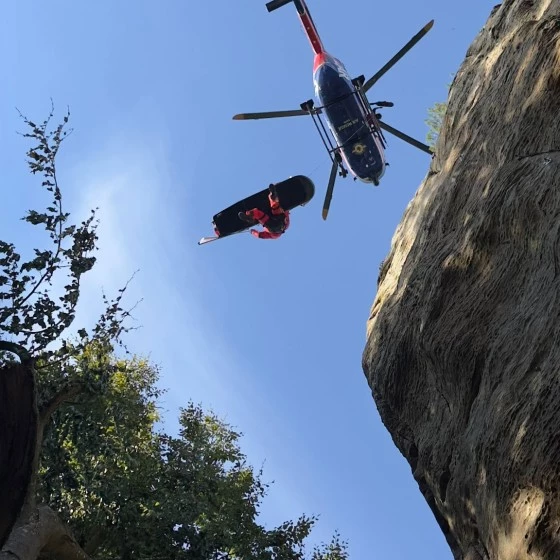
Helicopter missions are handled independently by the respective crews. In addition to primary emergency care and air rescue, the helicopters also carry out inter-hospital patient transfers.
Ambulance jets can take off with their crew within a maximum of two hours at any time of day or night and provide assistance anywhere in the world. The medical coordinator at the LCC clarifies all medical aspects in the case of patient repatriation and determines the most appropriate means of transport.
If the use of a flying intensive care unit is required, the flight dispatcher begins organising the mission. He determines weather conditions, obtains take-off and landing permissions, organises patient transport between the hospital and the airport, and plans the entire flight route, including possible refuelling stops.
As a France Transplant partner, LAR handles the transport of transplant teams and donor organs to recipients within France. Due to the limited preservation time of organs, speed and planning are essential. Around 1,400 times a year – approximately 3 to 4 times per day – LAR is commissioned by France Transplant for organ transport, an activity that mainly takes place at night.
As soon as a request is received, the LCC team prepares the flight routes within a very short time. Depending on the distance, either an LAR ambulance jet or an aircraft from a French partner company is used. The transplant team is flown to the donor, retrieves one or more organs, and then flies back to the recipient. From the time of organ retrieval to transplantation, only three to a maximum of four hours are available.
Maximum concentration
Maximum urgency, concentration and planning reliability require the LCC team and flight crews to perform at virtually 105% capacity. On New Year’s Eve, the LAR control centre recorded very high activity levels, leaving no time for celebration.
One member had to be repatriated from Uganda by ambulance jet, while two additional repatriation flights from Portugal and Spain had to be planned for 1 January – a very difficult task due to unfavourable weather conditions. In addition, five requests for organ transport were received from France Transplant. These could not be carried out by aircraft during New Year’s Eve due to poor visibility.
In such cases, the LCC works together with France Transplant to identify recipients located closer to the donor. Due to the shorter distances involved, the LCC organises the transport of surgical teams and organs by road.
Fog significantly complicated the work of the LCC team in flight planning. For the pilots of the repatriation flight from Uganda, it was a very uncertain night, as weather conditions can change within minutes and delay planned take-offs and landings.
LAR operations 2015
Helicopter missions: total 1,741
Ambulance jet flights: total 926, including 821 repatriations
Organ transports: 1,528 requests handled by the LCC for France Transplant. 777 organ transports were carried out by air in cooperation with French partners, and 125 flights were performed by LAR itself.

Luxembourg, 30 September 2015
The 2015 award of the Foundation for the Promotion of German-Luxembourg Cooperation in the field of sciences has been awarded to René Closter for his contribution to the creation and development of Luxembourg Air Rescue (LAR). Since 1988, the non-profit organisation has been responsible for rapid air emergency rescue and the transport of intensive care patients. LAR is financed through donations and contributions from its 185,000 members.
Boris Liedtke, Chairman of the Foundation and Board Member of Deutsche Bank Luxembourg S.A., said during the award ceremony: “LAR is the only organisation ensuring air rescue in the Grand Duchy. In addition, it also carries out rescue missions in the border regions of neighbouring countries. In this way, LAR has progressively built up and strengthened cooperation in the border region between Saarland and Rhineland-Palatinate. While discussions are still ongoing in Brussels, René Closter takes action. We are very pleased that there are people in the private sector who, on their own initiative, save lives across European borders. With this foundation award, we wish to support the further expansion of cross-border emergency rescue.”
René Closter, President of Luxembourg Air Rescue, expressed his appreciation for the award and said: “The prize I receive today, I dedicate to all those who have accompanied me over the past decades. My loyal friends, my dedicated employees. In short: all those who helped our shared dream succeed. Without the support of these companions, we would not have managed to establish LAR despite the massive resistance we faced at the time. For that, I am grateful.”
To support the close ties between the Grand Duchy of Luxembourg and the Federal Republic of Germany, Deutsche Bank Luxembourg S.A. founded a foundation in 1995 to promote German-Luxembourg cooperation. The purpose of the foundation is to promote cooperation between the two countries in all areas of science. This includes supporting research projects, awarding research grants and organising conferences. In addition, the foundation regularly honours institutions and individuals who have made outstanding contributions to scientific cooperation between Germany and Luxembourg. In 2015, the award is presented for the 10th time.
AIR RESCUE – The same rules apply on New Year’s Eve as on working days
LUXEMBOURG – LAR operates a fleet of five rescue helicopters and five ambulance jets. The so-called “fixed-wing” fleet, unlike the rescue helicopters, is also capable of flying at night. The coordination of ambulance jet missions is carried out at the Luxembourg Control Center (LCC) at Findel Airport. On Sundays, public holidays and during the New Year period, the same rules apply as on working days – “business as usual”.
At the end of the year, Tageblatt took a look behind the scenes of LAR for its readers. New Year’s Eve was anything but quiet for LAR staff, and weather conditions made flight operations considerably more difficult.
Daily operations
LAR’s worldwide aircraft missions are coordinated by a team at the LCC, where activity continues day and night. The aircraft fleet fulfils three essential tasks around the clock: on the one hand, the worldwide repatriation of patients – a service that is free of charge for LAR members. On the other hand, organ transport as an exclusive partner of “France Transplant”, as well as humanitarian missions, for example in the event of major natural disasters.
Helicopter missions are handled independently by the respective crews. In addition to primary emergency care and air rescue, the helicopters also carry out inter-hospital patient transfers.
Ambulance jets can take off with their crew within a maximum of two hours at any time of day or night and provide assistance anywhere in the world. The medical coordinator at the LCC clarifies all medical aspects in the case of patient repatriation and determines the most appropriate means of transport.
If the use of a flying intensive care unit is required, the flight dispatcher begins organising the mission. He determines weather conditions, obtains take-off and landing permissions, organises patient transport between the hospital and the airport, and plans the entire flight route, including possible refuelling stops.
As a France Transplant partner, LAR handles the transport of transplant teams and donor organs to recipients within France. Due to the limited preservation time of organs, speed and planning are essential. Around 1,400 times a year – approximately 3 to 4 times per day – LAR is commissioned by France Transplant for organ transport, an activity that mainly takes place at night.
As soon as a request is received, the LCC team prepares the flight routes within a very short time. Depending on the distance, either an LAR ambulance jet or an aircraft from a French partner company is used. The transplant team is flown to the donor, retrieves one or more organs, and then flies back to the recipient. From the time of organ retrieval to transplantation, only three to a maximum of four hours are available.
Maximum concentration
Maximum urgency, concentration and planning reliability require the LCC team and flight crews to perform at virtually 105% capacity. On New Year’s Eve, the LAR control centre recorded very high activity levels, leaving no time for celebration.
One member had to be repatriated from Uganda by ambulance jet, while two additional repatriation flights from Portugal and Spain had to be planned for 1 January – a very difficult task due to unfavourable weather conditions. In addition, five requests for organ transport were received from France Transplant. These could not be carried out by aircraft during New Year’s Eve due to poor visibility.
In such cases, the LCC works together with France Transplant to identify recipients located closer to the donor. Due to the shorter distances involved, the LCC organises the transport of surgical teams and organs by road.
Fog significantly complicated the work of the LCC team in flight planning. For the pilots of the repatriation flight from Uganda, it was a very uncertain night, as weather conditions can change within minutes and delay planned take-offs and landings.
LAR operations 2015
Helicopter missions: total 1,741
Ambulance jet flights: total 926, including 821 repatriations
Organ transports: 1,528 requests handled by the LCC for France Transplant. 777 organ transports were carried out by air in cooperation with French partners, and 125 flights were performed by LAR itself.
Luxembourg, 30 September 2015
The 2015 award of the Foundation for the Promotion of German-Luxembourg Cooperation in the field of sciences has been awarded to René Closter for his contribution to the creation and development of Luxembourg Air Rescue (LAR). Since 1988, the non-profit organisation has been responsible for rapid air emergency rescue and the transport of intensive care patients. LAR is financed through donations and contributions from its 185,000 members.
Boris Liedtke, Chairman of the Foundation and Board Member of Deutsche Bank Luxembourg S.A., said during the award ceremony: “LAR is the only organisation ensuring air rescue in the Grand Duchy. In addition, it also carries out rescue missions in the border regions of neighbouring countries. In this way, LAR has progressively built up and strengthened cooperation in the border region between Saarland and Rhineland-Palatinate. While discussions are still ongoing in Brussels, René Closter takes action. We are very pleased that there are people in the private sector who, on their own initiative, save lives across European borders. With this foundation award, we wish to support the further expansion of cross-border emergency rescue.”
René Closter, President of Luxembourg Air Rescue, expressed his appreciation for the award and said: “The prize I receive today, I dedicate to all those who have accompanied me over the past decades. My loyal friends, my dedicated employees. In short: all those who helped our shared dream succeed. Without the support of these companions, we would not have managed to establish LAR despite the massive resistance we faced at the time. For that, I am grateful.”
To support the close ties between the Grand Duchy of Luxembourg and the Federal Republic of Germany, Deutsche Bank Luxembourg S.A. founded a foundation in 1995 to promote German-Luxembourg cooperation. The purpose of the foundation is to promote cooperation between the two countries in all areas of science. This includes supporting research projects, awarding research grants and organising conferences. In addition, the foundation regularly honours institutions and individuals who have made outstanding contributions to scientific cooperation between Germany and Luxembourg. In 2015, the award is presented for the 10th time.
AIR RESCUE – The same rules apply on New Year’s Eve as on working days
LUXEMBOURG – LAR operates a fleet of five rescue helicopters and five ambulance jets. The so-called “fixed-wing” fleet, unlike the rescue helicopters, is also capable of flying at night. The coordination of ambulance jet missions is carried out at the Luxembourg Control Center (LCC) at Findel Airport. On Sundays, public holidays and during the New Year period, the same rules apply as on working days – “business as usual”.
At the end of the year, Tageblatt took a look behind the scenes of LAR for its readers. New Year’s Eve was anything but quiet for LAR staff, and weather conditions made flight operations considerably more difficult.
Daily operations
LAR’s worldwide aircraft missions are coordinated by a team at the LCC, where activity continues day and night. The aircraft fleet fulfils three essential tasks around the clock: on the one hand, the worldwide repatriation of patients – a service that is free of charge for LAR members. On the other hand, organ transport as an exclusive partner of “France Transplant”, as well as humanitarian missions, for example in the event of major natural disasters.
Helicopter missions are handled independently by the respective crews. In addition to primary emergency care and air rescue, the helicopters also carry out inter-hospital patient transfers.
Ambulance jets can take off with their crew within a maximum of two hours at any time of day or night and provide assistance anywhere in the world. The medical coordinator at the LCC clarifies all medical aspects in the case of patient repatriation and determines the most appropriate means of transport.
If the use of a flying intensive care unit is required, the flight dispatcher begins organising the mission. He determines weather conditions, obtains take-off and landing permissions, organises patient transport between the hospital and the airport, and plans the entire flight route, including possible refuelling stops.
As a France Transplant partner, LAR handles the transport of transplant teams and donor organs to recipients within France. Due to the limited preservation time of organs, speed and planning are essential. Around 1,400 times a year – approximately 3 to 4 times per day – LAR is commissioned by France Transplant for organ transport, an activity that mainly takes place at night.
As soon as a request is received, the LCC team prepares the flight routes within a very short time. Depending on the distance, either an LAR ambulance jet or an aircraft from a French partner company is used. The transplant team is flown to the donor, retrieves one or more organs, and then flies back to the recipient. From the time of organ retrieval to transplantation, only three to a maximum of four hours are available.
Maximum concentration
Maximum urgency, concentration and planning reliability require the LCC team and flight crews to perform at virtually 105% capacity. On New Year’s Eve, the LAR control centre recorded very high activity levels, leaving no time for celebration.
One member had to be repatriated from Uganda by ambulance jet, while two additional repatriation flights from Portugal and Spain had to be planned for 1 January – a very difficult task due to unfavourable weather conditions. In addition, five requests for organ transport were received from France Transplant. These could not be carried out by aircraft during New Year’s Eve due to poor visibility.
In such cases, the LCC works together with France Transplant to identify recipients located closer to the donor. Due to the shorter distances involved, the LCC organises the transport of surgical teams and organs by road.
Fog significantly complicated the work of the LCC team in flight planning. For the pilots of the repatriation flight from Uganda, it was a very uncertain night, as weather conditions can change within minutes and delay planned take-offs and landings.
LAR operations 2015
Helicopter missions: total 1,741
Ambulance jet flights: total 926, including 821 repatriations
Organ transports: 1,528 requests handled by the LCC for France Transplant. 777 organ transports were carried out by air in cooperation with French partners, and 125 flights were performed by LAR itself.