Published on
September 30, 2025
LUXEMBURG AIR RESCUE – President Rene Closter: a portrait
Air Rescue Luxembourg has existed for 27 years. This medium-sized company is an international player in the field of air rescue. Such a development was not foreseeable and cannot be taken for granted. Success stories of this kind are usually due to the commitment of individuals who stand behind them with the full strength of their personality. This is a portrait of the co-founder and long-standing CEO, Rene Closter.
Rene Closter is a man of clear words and firm convictions. In his dark blue uniform with the round Air Rescue emblem on his back, he feels more comfortable than in a suit. Small talk, receptions and formal gatherings are not his thing. He prefers to be where action is needed. Taking initiative, stepping in, launching things and making quick decisions — that is his world.
He has probably experienced more blows of fate than many others and has had to deliver hundreds of death notifications. He has reflected on the meaning of “our sincere condolences,” yet that too is not his world. He empathizes with the bereaved, speaks to them and stays by their side.
Nevertheless, the spotlight that falls on him when it comes to Air Rescue makes him uncomfortable. “I am not Air Rescue,” is a sentence he often repeats. It is true — and yet not entirely. Just as the success of air rescue in Luxembourg was not foreseeable, it was also not foreseeable for him that he would one day fight for it on the front line.
The foundations were laid at a time when there was no helicopter in the country. Emergency medical assistance or air rescue capable of treating victims within a very short time was unknown. Closter grew up in the Ösling region. “We were self-sufficient,” says the man from Ulflingen, whose father was left with nothing after the war. Attending secondary school was unthinkable. His father arranged an apprenticeship as an electrician in the business of his home village. At the time, this was completely normal: you took what was available, without discussion.
The eldest of three siblings accepts this, then after a few years decides to do something else. In 1973, he joins the professional fire brigade in the city and specializes in rescue services. “Arrive, load, deliver” — this is how he describes the basic routine of the time.
Due to the absence of an emergency doctor system, there were far more deaths on the roads each year than today. Standards we now take for granted — airbags, crumple zones, safety glass — did not exist. “Today we talk about 30 deaths per year; back then it was 128,” he recalls, remembering horrific injuries.
Together with colleagues, he trains in Brussels as an emergency medical assistant. Dedicated doctors join the effort, and Luxembourg’s emergency doctor system is established and later anchored in national law. But one crucial element is still missing: a helicopter. “At the time, we had to borrow one from abroad when needed — that was always difficult.”
Air Rescue is founded with German support and his personal willingness to take risks. In Germany as well, air rescue originated from private initiative: the parents of Björn Steiger founded the “Deutsche Rettungsflugwacht” after losing their son in a car accident. The resulting DRF Luftrettung is now the largest non-commercial air rescue service after ADAC.
Closter, then a civil servant, withstands a petition from doctors against him and goes into personal debt. He leases the first helicopter, including pilot and mechanic, from German colleagues and finances it with a mortgage on his house. The deal is sealed with a handshake. He makes such major decisions while jogging: “That’s when my mind is clear and my gut feeling kicks in.”
Perseverance and what he himself calls a stubborn mindset will still be needed. At that time, Air Rescue is small, operating with two employees and many volunteers.
Meanwhile, his career leads him into the financial sector after a safety and fire protection audit. Secure public service or private sector? He decides within 24 hours. From 1989, he works for Cedel International (later Clearstream) and spends several years abroad helping to build new branches in Dubai, London, Hong Kong and New York. As a director, he manages around one hundred employees.
Seven years later, he must decide again. The survival of Air Rescue is at stake; the association needs a leader. In 1996, he accepts, negotiates a transition period for a proper succession and further develops his original vision. Today, the company has more than 150 employees, five ambulance jets, as many helicopters and an annual turnover of around 30 million euros.
These are the figures by which companies are usually measured. For him, however, something else matters far more: strong public support and a large membership base. That is something he fought hard to achieve.
More than once, attempts were made to slow him down. “A helicopter in Luxembourg? Only over my dead body!” — he heard this more often than he would have liked. “Make or break” became his professional motto.
He enforces the integration of Air Rescue into the national emergency system (Samu) and establishes a base in Ettelbrück. Over time, new areas of activity are added, such as organ transport across Europe. The issue of “professional blockers” can still make him angry, as can the topic of Europe.
Air Rescue works well with the German states of Rhineland-Palatinate and Saarland. He fully embodies this “Europe on a small scale.” On the French side, however, things are seen differently: a forestry worker recently died after an accident just 500 meters beyond the border, as a helicopter from Strasbourg was only called hours later — too late. In Belgium, a lack of funding hinders cooperation.
Other principles that define him are modesty and respect. He rejects any “boss-like behavior” or privileges linked to his position. “Flying,” as he says, is simply part of his job — not a passion or a source of pride. “If I want to manage employees, I need to understand their work.” And he does — because he genuinely takes an interest in it, which is probably why it works so well.
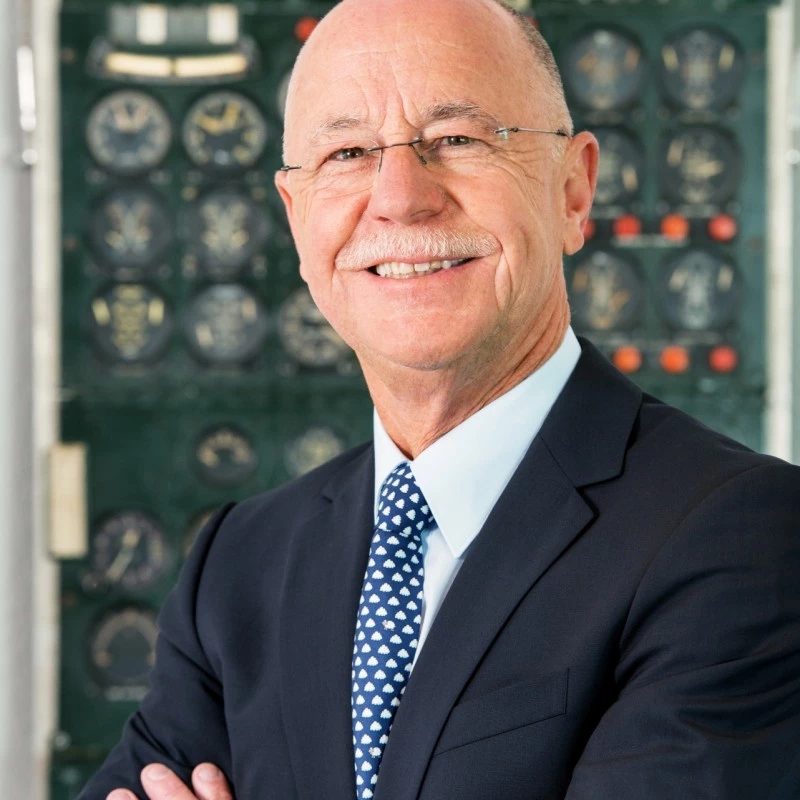
LUXEMBURG AIR RESCUE – President Rene Closter: a portrait
Air Rescue Luxembourg has existed for 27 years. This medium-sized company is an international player in the field of air rescue. Such a development was not foreseeable and cannot be taken for granted. Success stories of this kind are usually due to the commitment of individuals who stand behind them with the full strength of their personality. This is a portrait of the co-founder and long-standing CEO, Rene Closter.
Rene Closter is a man of clear words and firm convictions. In his dark blue uniform with the round Air Rescue emblem on his back, he feels more comfortable than in a suit. Small talk, receptions and formal gatherings are not his thing. He prefers to be where action is needed. Taking initiative, stepping in, launching things and making quick decisions — that is his world.
He has probably experienced more blows of fate than many others and has had to deliver hundreds of death notifications. He has reflected on the meaning of “our sincere condolences,” yet that too is not his world. He empathizes with the bereaved, speaks to them and stays by their side.
Nevertheless, the spotlight that falls on him when it comes to Air Rescue makes him uncomfortable. “I am not Air Rescue,” is a sentence he often repeats. It is true — and yet not entirely. Just as the success of air rescue in Luxembourg was not foreseeable, it was also not foreseeable for him that he would one day fight for it on the front line.
The foundations were laid at a time when there was no helicopter in the country. Emergency medical assistance or air rescue capable of treating victims within a very short time was unknown. Closter grew up in the Ösling region. “We were self-sufficient,” says the man from Ulflingen, whose father was left with nothing after the war. Attending secondary school was unthinkable. His father arranged an apprenticeship as an electrician in the business of his home village. At the time, this was completely normal: you took what was available, without discussion.
The eldest of three siblings accepts this, then after a few years decides to do something else. In 1973, he joins the professional fire brigade in the city and specializes in rescue services. “Arrive, load, deliver” — this is how he describes the basic routine of the time.
Due to the absence of an emergency doctor system, there were far more deaths on the roads each year than today. Standards we now take for granted — airbags, crumple zones, safety glass — did not exist. “Today we talk about 30 deaths per year; back then it was 128,” he recalls, remembering horrific injuries.
Together with colleagues, he trains in Brussels as an emergency medical assistant. Dedicated doctors join the effort, and Luxembourg’s emergency doctor system is established and later anchored in national law. But one crucial element is still missing: a helicopter. “At the time, we had to borrow one from abroad when needed — that was always difficult.”
Air Rescue is founded with German support and his personal willingness to take risks. In Germany as well, air rescue originated from private initiative: the parents of Björn Steiger founded the “Deutsche Rettungsflugwacht” after losing their son in a car accident. The resulting DRF Luftrettung is now the largest non-commercial air rescue service after ADAC.
Closter, then a civil servant, withstands a petition from doctors against him and goes into personal debt. He leases the first helicopter, including pilot and mechanic, from German colleagues and finances it with a mortgage on his house. The deal is sealed with a handshake. He makes such major decisions while jogging: “That’s when my mind is clear and my gut feeling kicks in.”
Perseverance and what he himself calls a stubborn mindset will still be needed. At that time, Air Rescue is small, operating with two employees and many volunteers.
Meanwhile, his career leads him into the financial sector after a safety and fire protection audit. Secure public service or private sector? He decides within 24 hours. From 1989, he works for Cedel International (later Clearstream) and spends several years abroad helping to build new branches in Dubai, London, Hong Kong and New York. As a director, he manages around one hundred employees.
Seven years later, he must decide again. The survival of Air Rescue is at stake; the association needs a leader. In 1996, he accepts, negotiates a transition period for a proper succession and further develops his original vision. Today, the company has more than 150 employees, five ambulance jets, as many helicopters and an annual turnover of around 30 million euros.
These are the figures by which companies are usually measured. For him, however, something else matters far more: strong public support and a large membership base. That is something he fought hard to achieve.
More than once, attempts were made to slow him down. “A helicopter in Luxembourg? Only over my dead body!” — he heard this more often than he would have liked. “Make or break” became his professional motto.
He enforces the integration of Air Rescue into the national emergency system (Samu) and establishes a base in Ettelbrück. Over time, new areas of activity are added, such as organ transport across Europe. The issue of “professional blockers” can still make him angry, as can the topic of Europe.
Air Rescue works well with the German states of Rhineland-Palatinate and Saarland. He fully embodies this “Europe on a small scale.” On the French side, however, things are seen differently: a forestry worker recently died after an accident just 500 meters beyond the border, as a helicopter from Strasbourg was only called hours later — too late. In Belgium, a lack of funding hinders cooperation.
Other principles that define him are modesty and respect. He rejects any “boss-like behavior” or privileges linked to his position. “Flying,” as he says, is simply part of his job — not a passion or a source of pride. “If I want to manage employees, I need to understand their work.” And he does — because he genuinely takes an interest in it, which is probably why it works so well.

LUXEMBURG AIR RESCUE – President Rene Closter: a portrait
Air Rescue Luxembourg has existed for 27 years. This medium-sized company is an international player in the field of air rescue. Such a development was not foreseeable and cannot be taken for granted. Success stories of this kind are usually due to the commitment of individuals who stand behind them with the full strength of their personality. This is a portrait of the co-founder and long-standing CEO, Rene Closter.
Rene Closter is a man of clear words and firm convictions. In his dark blue uniform with the round Air Rescue emblem on his back, he feels more comfortable than in a suit. Small talk, receptions and formal gatherings are not his thing. He prefers to be where action is needed. Taking initiative, stepping in, launching things and making quick decisions — that is his world.
He has probably experienced more blows of fate than many others and has had to deliver hundreds of death notifications. He has reflected on the meaning of “our sincere condolences,” yet that too is not his world. He empathizes with the bereaved, speaks to them and stays by their side.
Nevertheless, the spotlight that falls on him when it comes to Air Rescue makes him uncomfortable. “I am not Air Rescue,” is a sentence he often repeats. It is true — and yet not entirely. Just as the success of air rescue in Luxembourg was not foreseeable, it was also not foreseeable for him that he would one day fight for it on the front line.
The foundations were laid at a time when there was no helicopter in the country. Emergency medical assistance or air rescue capable of treating victims within a very short time was unknown. Closter grew up in the Ösling region. “We were self-sufficient,” says the man from Ulflingen, whose father was left with nothing after the war. Attending secondary school was unthinkable. His father arranged an apprenticeship as an electrician in the business of his home village. At the time, this was completely normal: you took what was available, without discussion.
The eldest of three siblings accepts this, then after a few years decides to do something else. In 1973, he joins the professional fire brigade in the city and specializes in rescue services. “Arrive, load, deliver” — this is how he describes the basic routine of the time.
Due to the absence of an emergency doctor system, there were far more deaths on the roads each year than today. Standards we now take for granted — airbags, crumple zones, safety glass — did not exist. “Today we talk about 30 deaths per year; back then it was 128,” he recalls, remembering horrific injuries.
Together with colleagues, he trains in Brussels as an emergency medical assistant. Dedicated doctors join the effort, and Luxembourg’s emergency doctor system is established and later anchored in national law. But one crucial element is still missing: a helicopter. “At the time, we had to borrow one from abroad when needed — that was always difficult.”
Air Rescue is founded with German support and his personal willingness to take risks. In Germany as well, air rescue originated from private initiative: the parents of Björn Steiger founded the “Deutsche Rettungsflugwacht” after losing their son in a car accident. The resulting DRF Luftrettung is now the largest non-commercial air rescue service after ADAC.
Closter, then a civil servant, withstands a petition from doctors against him and goes into personal debt. He leases the first helicopter, including pilot and mechanic, from German colleagues and finances it with a mortgage on his house. The deal is sealed with a handshake. He makes such major decisions while jogging: “That’s when my mind is clear and my gut feeling kicks in.”
Perseverance and what he himself calls a stubborn mindset will still be needed. At that time, Air Rescue is small, operating with two employees and many volunteers.
Meanwhile, his career leads him into the financial sector after a safety and fire protection audit. Secure public service or private sector? He decides within 24 hours. From 1989, he works for Cedel International (later Clearstream) and spends several years abroad helping to build new branches in Dubai, London, Hong Kong and New York. As a director, he manages around one hundred employees.
Seven years later, he must decide again. The survival of Air Rescue is at stake; the association needs a leader. In 1996, he accepts, negotiates a transition period for a proper succession and further develops his original vision. Today, the company has more than 150 employees, five ambulance jets, as many helicopters and an annual turnover of around 30 million euros.
These are the figures by which companies are usually measured. For him, however, something else matters far more: strong public support and a large membership base. That is something he fought hard to achieve.
More than once, attempts were made to slow him down. “A helicopter in Luxembourg? Only over my dead body!” — he heard this more often than he would have liked. “Make or break” became his professional motto.
He enforces the integration of Air Rescue into the national emergency system (Samu) and establishes a base in Ettelbrück. Over time, new areas of activity are added, such as organ transport across Europe. The issue of “professional blockers” can still make him angry, as can the topic of Europe.
Air Rescue works well with the German states of Rhineland-Palatinate and Saarland. He fully embodies this “Europe on a small scale.” On the French side, however, things are seen differently: a forestry worker recently died after an accident just 500 meters beyond the border, as a helicopter from Strasbourg was only called hours later — too late. In Belgium, a lack of funding hinders cooperation.
Other principles that define him are modesty and respect. He rejects any “boss-like behavior” or privileges linked to his position. “Flying,” as he says, is simply part of his job — not a passion or a source of pride. “If I want to manage employees, I need to understand their work.” And he does — because he genuinely takes an interest in it, which is probably why it works so well.