Published on
September 30, 2025
Luxembourg Air Rescue now operates a “flying isolation unit”.
As announced during the presentation of the national Ebola emergency plan, two LAR LearJet 45XR aircraft have been modified to transport highly infectious patients. The conversion costs are covered by the Luxembourg government with support from the European Commission.
With this specialised equipment, patients infected with the Ebola virus can now be evacuated from affected regions. They receive continuous intensive medical care throughout the flight. In addition, patients suffering from other highly infectious diseases can also be transported using LAR’s air ambulance fleet.
The development was carried out under the supervision of LAR’s medical department, in cooperation with the Austrian company Air Ambulance Technology and the UK-based company PPS (Professional Protection Systems). The equipment of the nearly 18-metre-long aircraft required meticulous planning, including a complete reconfiguration of the cabin.
The objective was to create a “cabin within a cabin” to ensure that LAR staff and the aircraft interior are never in direct contact with the patient. As an additional safety measure, all disposable materials used during treatment are properly disposed of and incinerated after the mission.
The development of the module took several months in order to meet both medical and aeronautical requirements.
Personnel selected for these missions underwent intensive training. Pilots, doctors, intensive care nurses and ground-handling staff were trained in Brussels, in cooperation with Médecins Sans Frontières, to meet the specific requirements of such operations.
Furthermore, operational procedures were revised by Luxembourg authorities in cooperation with LAR, the European Commission and the World Health Organization to ensure rapid and efficient evacuation of infectious patients.
Since 2012, Luxembourg has registered the MEDEVAC module within the European Civil Protection Mechanism. Since 16 October 2014, this mechanism has been complemented by the “Voluntary Pool”, which is based on the voluntary provision of capacities by member states.
In return, up to 100% of the technical adaptation costs and up to 85% of transport costs can be covered by the European Commission.
In the event of an evacuation request, the national contact point 112 is contacted by the Emergency Response Coordination Centre (ERCC) in Brussels. The World Health Organization (WHO) prepares the patient’s medical file and coordinates with hospitals.
At national level, procedures enable the 112 contact point and the LAR control centre to implement all necessary measures for evacuation. They also define the authorities and organisations involved in the operation and crisis management.
Several countries, including Japan, Canada and Switzerland, have already expressed interest in Luxembourg’s infectious patient module in the context of the Ebola epidemic.

Luxembourg Air Rescue now operates a “flying isolation unit”.
As announced during the presentation of the national Ebola emergency plan, two LAR LearJet 45XR aircraft have been modified to transport highly infectious patients. The conversion costs are covered by the Luxembourg government with support from the European Commission.
With this specialised equipment, patients infected with the Ebola virus can now be evacuated from affected regions. They receive continuous intensive medical care throughout the flight. In addition, patients suffering from other highly infectious diseases can also be transported using LAR’s air ambulance fleet.
The development was carried out under the supervision of LAR’s medical department, in cooperation with the Austrian company Air Ambulance Technology and the UK-based company PPS (Professional Protection Systems). The equipment of the nearly 18-metre-long aircraft required meticulous planning, including a complete reconfiguration of the cabin.
The objective was to create a “cabin within a cabin” to ensure that LAR staff and the aircraft interior are never in direct contact with the patient. As an additional safety measure, all disposable materials used during treatment are properly disposed of and incinerated after the mission.
The development of the module took several months in order to meet both medical and aeronautical requirements.
Personnel selected for these missions underwent intensive training. Pilots, doctors, intensive care nurses and ground-handling staff were trained in Brussels, in cooperation with Médecins Sans Frontières, to meet the specific requirements of such operations.
Furthermore, operational procedures were revised by Luxembourg authorities in cooperation with LAR, the European Commission and the World Health Organization to ensure rapid and efficient evacuation of infectious patients.
Since 2012, Luxembourg has registered the MEDEVAC module within the European Civil Protection Mechanism. Since 16 October 2014, this mechanism has been complemented by the “Voluntary Pool”, which is based on the voluntary provision of capacities by member states.
In return, up to 100% of the technical adaptation costs and up to 85% of transport costs can be covered by the European Commission.
In the event of an evacuation request, the national contact point 112 is contacted by the Emergency Response Coordination Centre (ERCC) in Brussels. The World Health Organization (WHO) prepares the patient’s medical file and coordinates with hospitals.
At national level, procedures enable the 112 contact point and the LAR control centre to implement all necessary measures for evacuation. They also define the authorities and organisations involved in the operation and crisis management.
Several countries, including Japan, Canada and Switzerland, have already expressed interest in Luxembourg’s infectious patient module in the context of the Ebola epidemic.
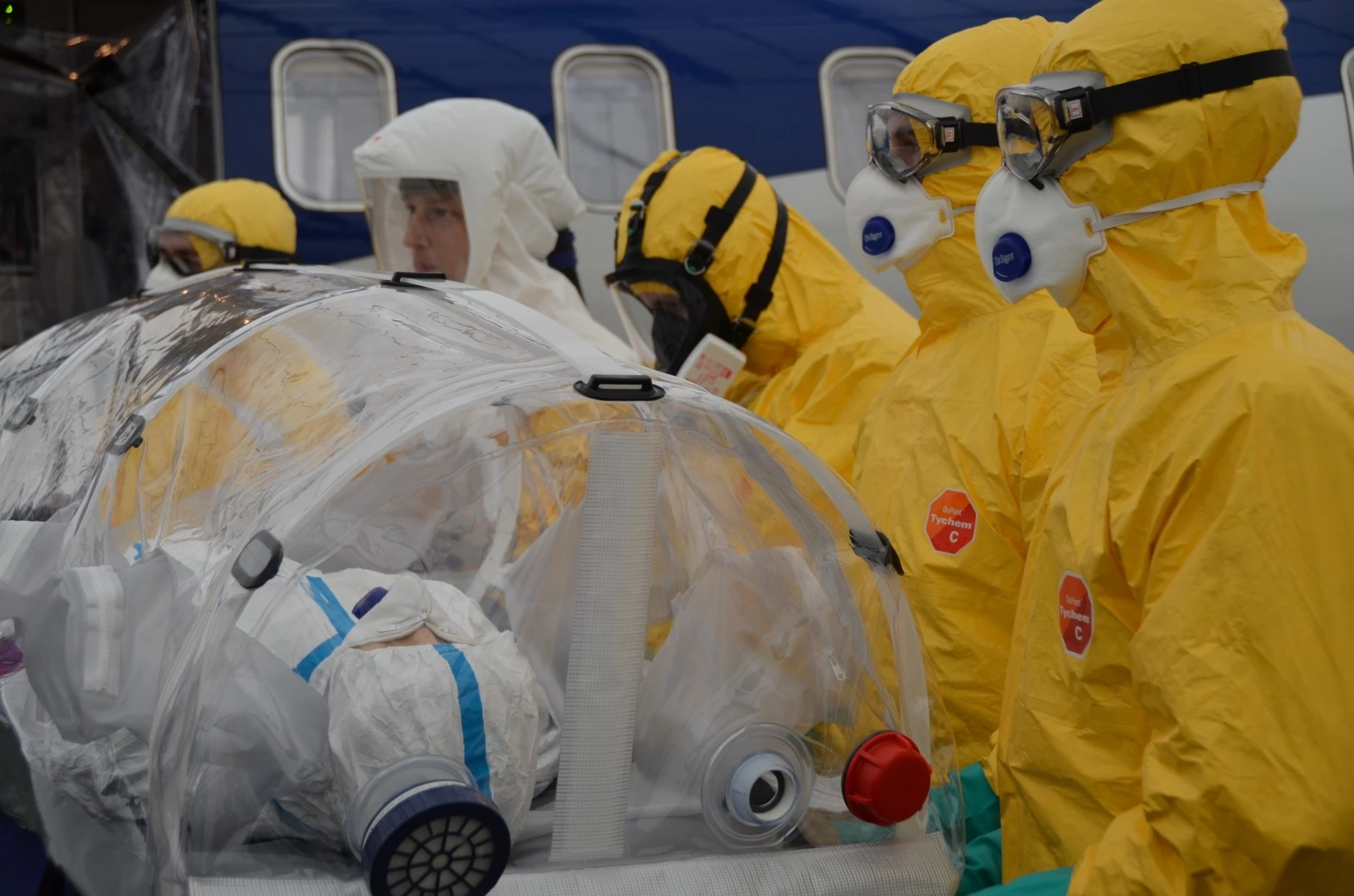
Luxembourg Air Rescue now operates a “flying isolation unit”.
As announced during the presentation of the national Ebola emergency plan, two LAR LearJet 45XR aircraft have been modified to transport highly infectious patients. The conversion costs are covered by the Luxembourg government with support from the European Commission.
With this specialised equipment, patients infected with the Ebola virus can now be evacuated from affected regions. They receive continuous intensive medical care throughout the flight. In addition, patients suffering from other highly infectious diseases can also be transported using LAR’s air ambulance fleet.
The development was carried out under the supervision of LAR’s medical department, in cooperation with the Austrian company Air Ambulance Technology and the UK-based company PPS (Professional Protection Systems). The equipment of the nearly 18-metre-long aircraft required meticulous planning, including a complete reconfiguration of the cabin.
The objective was to create a “cabin within a cabin” to ensure that LAR staff and the aircraft interior are never in direct contact with the patient. As an additional safety measure, all disposable materials used during treatment are properly disposed of and incinerated after the mission.
The development of the module took several months in order to meet both medical and aeronautical requirements.
Personnel selected for these missions underwent intensive training. Pilots, doctors, intensive care nurses and ground-handling staff were trained in Brussels, in cooperation with Médecins Sans Frontières, to meet the specific requirements of such operations.
Furthermore, operational procedures were revised by Luxembourg authorities in cooperation with LAR, the European Commission and the World Health Organization to ensure rapid and efficient evacuation of infectious patients.
Since 2012, Luxembourg has registered the MEDEVAC module within the European Civil Protection Mechanism. Since 16 October 2014, this mechanism has been complemented by the “Voluntary Pool”, which is based on the voluntary provision of capacities by member states.
In return, up to 100% of the technical adaptation costs and up to 85% of transport costs can be covered by the European Commission.
In the event of an evacuation request, the national contact point 112 is contacted by the Emergency Response Coordination Centre (ERCC) in Brussels. The World Health Organization (WHO) prepares the patient’s medical file and coordinates with hospitals.
At national level, procedures enable the 112 contact point and the LAR control centre to implement all necessary measures for evacuation. They also define the authorities and organisations involved in the operation and crisis management.
Several countries, including Japan, Canada and Switzerland, have already expressed interest in Luxembourg’s infectious patient module in the context of the Ebola epidemic.