
Published on
September 30, 2025
Belgium’s National Day solemnly celebrated in Luxembourg
Two days ahead of the official date, the Ambassador of the Kingdom of Belgium to Luxembourg, Luc Terlinck, and his wife Rita Hauchecorne hosted a reception on Friday evening at their residence “Itzigerstée” to celebrate Belgium’s National Day. The event took place in a special context due to the change of reign that occurred in Brussels shortly afterwards.
Belgium’s National Day commemorates the arrival of the first King of the Belgians, Leopold I, in Brussels and, above all, his oath to the Constitution on 21 July 1831. Following the Belgian Revolution of 1830 and the declaration of independence on 4 October of that year, a provisional government and a national congress drafted the constitution of the new state. After diplomatic negotiations, the crown was offered to Prince Leopold of Saxe-Coburg-Gotha, who became the first King of the Belgians. The Netherlands formally recognised Belgian independence only in 1839. The date of 21 July officially became Belgium’s National Day in 1890.
The reception gathered numerous Luxembourg and diplomatic personalities. Among those present were the President of the Chamber of Deputies Laurent Mosar, Prime Minister Jean-Claude Juncker, Minister of State Jacques Santer, President of the Council of State Victor Gillen and several members of parliament and representatives of the diplomatic corps. In his speech, Ambassador Luc Terlinck referred to the abdication of King Albert II and the accession of Prince Philippe, praising the outgoing monarch’s role in maintaining unity among Belgians.
A decoration and a citation of recognition
During the reception, the ambassador also recalled the tragic Belgian bus accident that occurred on the night of 12-13 March 2012 in a tunnel in Switzerland, claiming 28 lives, including 22 children. In these tragic circumstances, René Closter, director of Luxembourg Air Rescue (LAR), had spontaneously offered the assistance of his organisation to repatriate the injured children with LAR’s air ambulance aircraft.
As Switzerland efficiently organised the repatriations itself, Belgium ultimately did not need to call upon Luxembourg’s assistance. Nevertheless, the gesture of solidarity by LAR was highly appreciated by the Belgian authorities. In recognition of this initiative, Ambassador Terlinck announced that King Albert II had awarded René Closter the rank of Officer in the Order of the Crown of Belgium and presented him with the insignia.
During the same reception, the ambassador also paid tribute to Jean Konsbruck, now aged 84, for his long-standing service to the embassy. Since 1955, this discreet yet invaluable collaborator has served as the majordomo during embassy events, working under no fewer than fifteen successive ambassadors.

Belgium’s National Day solemnly celebrated in Luxembourg
Two days ahead of the official date, the Ambassador of the Kingdom of Belgium to Luxembourg, Luc Terlinck, and his wife Rita Hauchecorne hosted a reception on Friday evening at their residence “Itzigerstée” to celebrate Belgium’s National Day. The event took place in a special context due to the change of reign that occurred in Brussels shortly afterwards.
Belgium’s National Day commemorates the arrival of the first King of the Belgians, Leopold I, in Brussels and, above all, his oath to the Constitution on 21 July 1831. Following the Belgian Revolution of 1830 and the declaration of independence on 4 October of that year, a provisional government and a national congress drafted the constitution of the new state. After diplomatic negotiations, the crown was offered to Prince Leopold of Saxe-Coburg-Gotha, who became the first King of the Belgians. The Netherlands formally recognised Belgian independence only in 1839. The date of 21 July officially became Belgium’s National Day in 1890.
The reception gathered numerous Luxembourg and diplomatic personalities. Among those present were the President of the Chamber of Deputies Laurent Mosar, Prime Minister Jean-Claude Juncker, Minister of State Jacques Santer, President of the Council of State Victor Gillen and several members of parliament and representatives of the diplomatic corps. In his speech, Ambassador Luc Terlinck referred to the abdication of King Albert II and the accession of Prince Philippe, praising the outgoing monarch’s role in maintaining unity among Belgians.
A decoration and a citation of recognition
During the reception, the ambassador also recalled the tragic Belgian bus accident that occurred on the night of 12-13 March 2012 in a tunnel in Switzerland, claiming 28 lives, including 22 children. In these tragic circumstances, René Closter, director of Luxembourg Air Rescue (LAR), had spontaneously offered the assistance of his organisation to repatriate the injured children with LAR’s air ambulance aircraft.
As Switzerland efficiently organised the repatriations itself, Belgium ultimately did not need to call upon Luxembourg’s assistance. Nevertheless, the gesture of solidarity by LAR was highly appreciated by the Belgian authorities. In recognition of this initiative, Ambassador Terlinck announced that King Albert II had awarded René Closter the rank of Officer in the Order of the Crown of Belgium and presented him with the insignia.
During the same reception, the ambassador also paid tribute to Jean Konsbruck, now aged 84, for his long-standing service to the embassy. Since 1955, this discreet yet invaluable collaborator has served as the majordomo during embassy events, working under no fewer than fifteen successive ambassadors.
Belgium’s National Day solemnly celebrated in Luxembourg
Two days ahead of the official date, the Ambassador of the Kingdom of Belgium to Luxembourg, Luc Terlinck, and his wife Rita Hauchecorne hosted a reception on Friday evening at their residence “Itzigerstée” to celebrate Belgium’s National Day. The event took place in a special context due to the change of reign that occurred in Brussels shortly afterwards.
Belgium’s National Day commemorates the arrival of the first King of the Belgians, Leopold I, in Brussels and, above all, his oath to the Constitution on 21 July 1831. Following the Belgian Revolution of 1830 and the declaration of independence on 4 October of that year, a provisional government and a national congress drafted the constitution of the new state. After diplomatic negotiations, the crown was offered to Prince Leopold of Saxe-Coburg-Gotha, who became the first King of the Belgians. The Netherlands formally recognised Belgian independence only in 1839. The date of 21 July officially became Belgium’s National Day in 1890.
The reception gathered numerous Luxembourg and diplomatic personalities. Among those present were the President of the Chamber of Deputies Laurent Mosar, Prime Minister Jean-Claude Juncker, Minister of State Jacques Santer, President of the Council of State Victor Gillen and several members of parliament and representatives of the diplomatic corps. In his speech, Ambassador Luc Terlinck referred to the abdication of King Albert II and the accession of Prince Philippe, praising the outgoing monarch’s role in maintaining unity among Belgians.
A decoration and a citation of recognition
During the reception, the ambassador also recalled the tragic Belgian bus accident that occurred on the night of 12-13 March 2012 in a tunnel in Switzerland, claiming 28 lives, including 22 children. In these tragic circumstances, René Closter, director of Luxembourg Air Rescue (LAR), had spontaneously offered the assistance of his organisation to repatriate the injured children with LAR’s air ambulance aircraft.
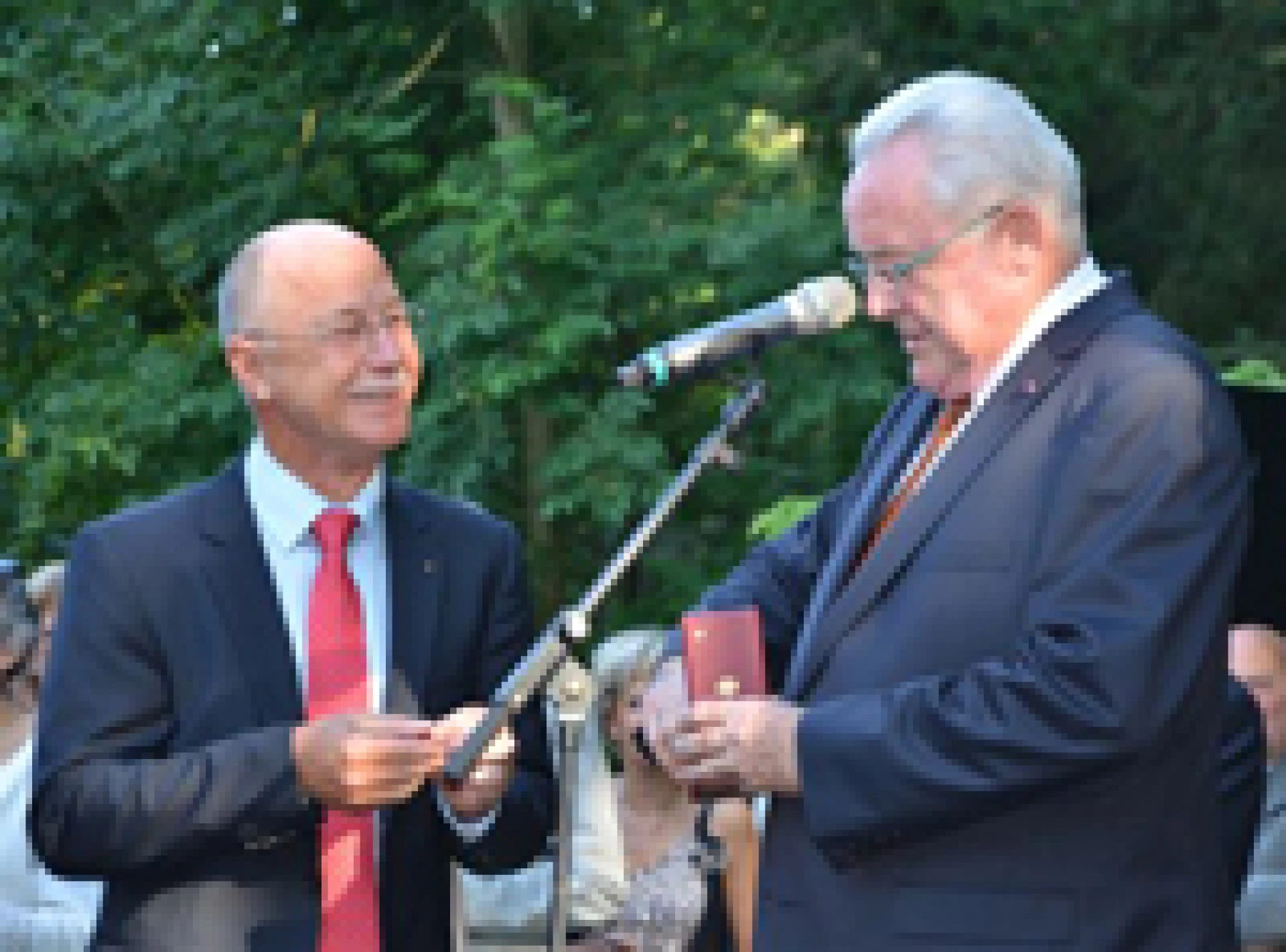
As Switzerland efficiently organised the repatriations itself, Belgium ultimately did not need to call upon Luxembourg’s assistance. Nevertheless, the gesture of solidarity by LAR was highly appreciated by the Belgian authorities. In recognition of this initiative, Ambassador Terlinck announced that King Albert II had awarded René Closter the rank of Officer in the Order of the Crown of Belgium and presented him with the insignia.
During the same reception, the ambassador also paid tribute to Jean Konsbruck, now aged 84, for his long-standing service to the embassy. Since 1955, this discreet yet invaluable collaborator has served as the majordomo during embassy events, working under no fewer than fifteen successive ambassadors.