Published on
September 30, 2025
At the beginning there was an idea. Behind it stood a determined “Éislecker Déckkapp”. The history of Luxembourg Air Rescue (LAR) is closely linked to its founder and manager, René Closter.
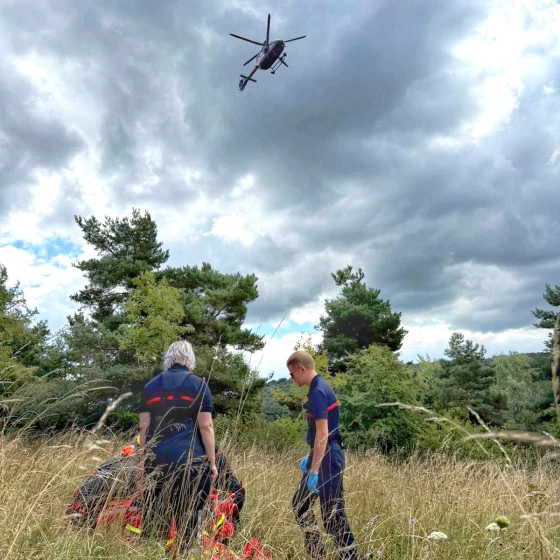
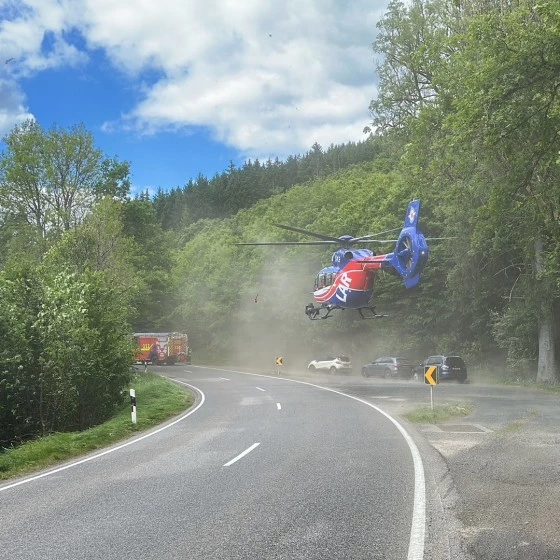
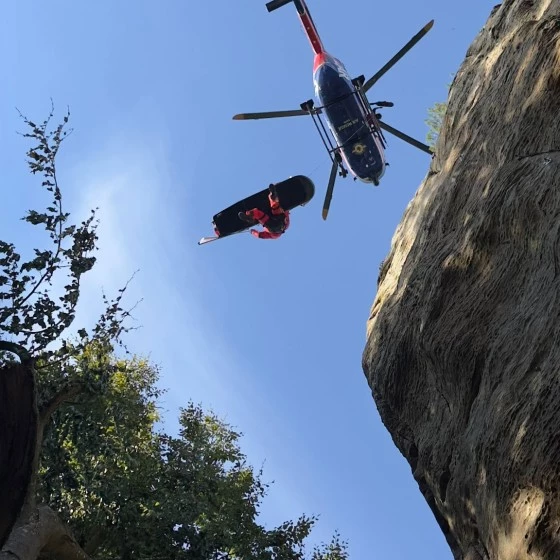
LUXEMBOURG – “A medium-sized company with a humanitarian mission,” is how René Closter describes Luxembourg’s air rescue service and its roughly 150 employees who are on call 24 hours a day, seven days a week. Rapid response within the national emergency system – the helicopter can be on site within ten minutes – is only the visible part of the work. Twenty-five years after its creation, LAR also carries out worldwide medical transports, rescue helicopter missions and organ transport flights.
The five helicopters are integrated into the Luxembourg emergency system, but agreements also exist with Saarland and Rhineland-Palatinate. As a result, the aircraft carry out more than 1,000 missions per year. In France, LAR secured exclusive rights for organ transport after a public tender, amounting to around 1,300 flights annually.
Hospitals cover the costs of these transports, while worldwide repatriations of sick patients are requested and financed by insurance companies. At the time of our interview, one LAR aircraft was operating between Moscow, Moldova and Naples, another was bringing a patient from Burkina Faso to Brussels, and a third was flying between Benin, Marseille, the Isle of Man and Luxembourg. “Just an ordinary day,” says Closter.
The fact that LAR has become a medium-sized enterprise and the third-largest airline operating at Findel Airport is also the result of a personal journey. René Closter was a professional firefighter and during his career carried out more than 14,000 ambulance missions. Again and again he saw how crucial rapid assistance can be in serious accidents.
The turning point came after a traffic accident on a Friday evening in July when a nine-year-old boy lost his leg. While trying to transport the boy and his severed limb to a specialised clinic in Toul, the ambulance became trapped in heavy traffic. “The boy kept looking at me and talking about his leg. And I thought about my own son of the same age at home,” Closter recalls.
René Closter is a fighter. Coming from very modest circumstances, he worked his way up to become a professional firefighter – “we had no money for university, I had to start working as soon as possible.” With the same determination he fought to establish Luxembourg’s air rescue service. In the early days, the organisation was simply a group of friends. The helicopter and crew were provided by the German Air Rescue Service, while volunteers handled the emergency duty.
Political authorities, civil protection and parts of the medical community initially opposed the project. “There was hardly a political obstacle that was not placed in our path,” Closter recalls. What encouraged him to continue was the steadily growing number of members. Recognition of the foundation as a charitable organisation also allowed donations to become tax-deductible.
In the early years, Closter even made it a point of honour to personally collect every donation cheque. The funds are not used for the normal budget but specifically to purchase better equipment. Despite its success, the organisation has sometimes been confronted with criticism. For this reason, Closter has the association reviewed not only by financial auditors but also by an ethics committee.
At the same time, Closter’s professional career also evolved. The trained electrical technician left the fire brigade in 1992 to work as a security specialist for a bank, which sent him to Hong Kong, New York, London and Dubai. In 1995 he returned to Luxembourg with the task of managing LAR professionally. He obtained both his pilot’s licence and helicopter licence so that he could actively assist during crisis situations.
Today more than 185,000 members form the basis of the organisation, which operates five helicopters and four air ambulance jets. All aircraft are fully equipped medically and are used exclusively for medical missions.

At the beginning there was an idea. Behind it stood a determined “Éislecker Déckkapp”. The history of Luxembourg Air Rescue (LAR) is closely linked to its founder and manager, René Closter.
LUXEMBOURG – “A medium-sized company with a humanitarian mission,” is how René Closter describes Luxembourg’s air rescue service and its roughly 150 employees who are on call 24 hours a day, seven days a week. Rapid response within the national emergency system – the helicopter can be on site within ten minutes – is only the visible part of the work. Twenty-five years after its creation, LAR also carries out worldwide medical transports, rescue helicopter missions and organ transport flights.
The five helicopters are integrated into the Luxembourg emergency system, but agreements also exist with Saarland and Rhineland-Palatinate. As a result, the aircraft carry out more than 1,000 missions per year. In France, LAR secured exclusive rights for organ transport after a public tender, amounting to around 1,300 flights annually.
Hospitals cover the costs of these transports, while worldwide repatriations of sick patients are requested and financed by insurance companies. At the time of our interview, one LAR aircraft was operating between Moscow, Moldova and Naples, another was bringing a patient from Burkina Faso to Brussels, and a third was flying between Benin, Marseille, the Isle of Man and Luxembourg. “Just an ordinary day,” says Closter.
The fact that LAR has become a medium-sized enterprise and the third-largest airline operating at Findel Airport is also the result of a personal journey. René Closter was a professional firefighter and during his career carried out more than 14,000 ambulance missions. Again and again he saw how crucial rapid assistance can be in serious accidents.
The turning point came after a traffic accident on a Friday evening in July when a nine-year-old boy lost his leg. While trying to transport the boy and his severed limb to a specialised clinic in Toul, the ambulance became trapped in heavy traffic. “The boy kept looking at me and talking about his leg. And I thought about my own son of the same age at home,” Closter recalls.
René Closter is a fighter. Coming from very modest circumstances, he worked his way up to become a professional firefighter – “we had no money for university, I had to start working as soon as possible.” With the same determination he fought to establish Luxembourg’s air rescue service. In the early days, the organisation was simply a group of friends. The helicopter and crew were provided by the German Air Rescue Service, while volunteers handled the emergency duty.
Political authorities, civil protection and parts of the medical community initially opposed the project. “There was hardly a political obstacle that was not placed in our path,” Closter recalls. What encouraged him to continue was the steadily growing number of members. Recognition of the foundation as a charitable organisation also allowed donations to become tax-deductible.
In the early years, Closter even made it a point of honour to personally collect every donation cheque. The funds are not used for the normal budget but specifically to purchase better equipment. Despite its success, the organisation has sometimes been confronted with criticism. For this reason, Closter has the association reviewed not only by financial auditors but also by an ethics committee.
At the same time, Closter’s professional career also evolved. The trained electrical technician left the fire brigade in 1992 to work as a security specialist for a bank, which sent him to Hong Kong, New York, London and Dubai. In 1995 he returned to Luxembourg with the task of managing LAR professionally. He obtained both his pilot’s licence and helicopter licence so that he could actively assist during crisis situations.
Today more than 185,000 members form the basis of the organisation, which operates five helicopters and four air ambulance jets. All aircraft are fully equipped medically and are used exclusively for medical missions.
At the beginning there was an idea. Behind it stood a determined “Éislecker Déckkapp”. The history of Luxembourg Air Rescue (LAR) is closely linked to its founder and manager, René Closter.
LUXEMBOURG – “A medium-sized company with a humanitarian mission,” is how René Closter describes Luxembourg’s air rescue service and its roughly 150 employees who are on call 24 hours a day, seven days a week. Rapid response within the national emergency system – the helicopter can be on site within ten minutes – is only the visible part of the work. Twenty-five years after its creation, LAR also carries out worldwide medical transports, rescue helicopter missions and organ transport flights.
The five helicopters are integrated into the Luxembourg emergency system, but agreements also exist with Saarland and Rhineland-Palatinate. As a result, the aircraft carry out more than 1,000 missions per year. In France, LAR secured exclusive rights for organ transport after a public tender, amounting to around 1,300 flights annually.
Hospitals cover the costs of these transports, while worldwide repatriations of sick patients are requested and financed by insurance companies. At the time of our interview, one LAR aircraft was operating between Moscow, Moldova and Naples, another was bringing a patient from Burkina Faso to Brussels, and a third was flying between Benin, Marseille, the Isle of Man and Luxembourg. “Just an ordinary day,” says Closter.
The fact that LAR has become a medium-sized enterprise and the third-largest airline operating at Findel Airport is also the result of a personal journey. René Closter was a professional firefighter and during his career carried out more than 14,000 ambulance missions. Again and again he saw how crucial rapid assistance can be in serious accidents.
The turning point came after a traffic accident on a Friday evening in July when a nine-year-old boy lost his leg. While trying to transport the boy and his severed limb to a specialised clinic in Toul, the ambulance became trapped in heavy traffic. “The boy kept looking at me and talking about his leg. And I thought about my own son of the same age at home,” Closter recalls.
René Closter is a fighter. Coming from very modest circumstances, he worked his way up to become a professional firefighter – “we had no money for university, I had to start working as soon as possible.” With the same determination he fought to establish Luxembourg’s air rescue service. In the early days, the organisation was simply a group of friends. The helicopter and crew were provided by the German Air Rescue Service, while volunteers handled the emergency duty.
Political authorities, civil protection and parts of the medical community initially opposed the project. “There was hardly a political obstacle that was not placed in our path,” Closter recalls. What encouraged him to continue was the steadily growing number of members. Recognition of the foundation as a charitable organisation also allowed donations to become tax-deductible.
In the early years, Closter even made it a point of honour to personally collect every donation cheque. The funds are not used for the normal budget but specifically to purchase better equipment. Despite its success, the organisation has sometimes been confronted with criticism. For this reason, Closter has the association reviewed not only by financial auditors but also by an ethics committee.
At the same time, Closter’s professional career also evolved. The trained electrical technician left the fire brigade in 1992 to work as a security specialist for a bank, which sent him to Hong Kong, New York, London and Dubai. In 1995 he returned to Luxembourg with the task of managing LAR professionally. He obtained both his pilot’s licence and helicopter licence so that he could actively assist during crisis situations.
Today more than 185,000 members form the basis of the organisation, which operates five helicopters and four air ambulance jets. All aircraft are fully equipped medically and are used exclusively for medical missions.